

The strongest examples of successful ACO technology partnerships in 2025–2026 share one trait: they pair a specific clinical problem with a partner whose model fits the ACO's governance reality, not just its budget. Here is the shortlist executives are citing right now.
- OCHIN + Community Care Cooperative (C3) — EHR platform + MSO operating expertise; covers a substantial number of Medicare-eligible patients; lets community health centers enter value-based care without building internal risk infrastructure.
- MultiCare Connected Care + Tuva Health — open-source analytics platform for a large member population; initial actuarial analysis indicated Tuva's platform could be lower cost than comparable commercial alternatives.
- Cleveland Clinic + Siemens Healthineers — 10-year strategic alliance covering imaging, radiation oncology, and interventional radiology; on-site technical staff plus co-developed research programs.
- Adventist HealthCare Physician Alliance (AHPA) + Innovaccer — unified data and care-management platform; $1.8M in MSSP savings in year one, notable readmission reduction in targeted workflows.
- Aidoc Diagnostic AI Consortium — twelve U.S. health systems co-designing AI diagnostic workflows; consortium members collectively serve a very large patient population.
These are not aspirational pilots. Each has a named partner, a defined population, and at least one public outcome metric tied to MSSP performance or clinical throughput. That combination is what makes them worth studying.
Key Takeaways
The most defensible ACO technology partnerships combine a specific clinical problem, a defined measurement plan, and a governance structure that keeps clinical protocol ownership with the ACO, not the vendor.
| Point | Details |
|---|---|
| Match model to problem | EHR + MSO for FQHCs, open-source analytics for cost control, consortium for AI diagnostics. |
| Anchor pilots to metrics | Define HEDIS or MSSP targets before go-live; 90-day data quality and 180-day PMPM signals are minimum checkpoints. |
| Negotiate governance first | Data ownership, de-identification rules, and exit terms must be in the contract before deployment begins. |
| Validate vendor claims independently | Vendor case studies (e.g., $1.8M MSSP savings, 15.8% readmission reduction) require a stated baseline, risk adjustment, and ideally a reference CMO call. |
| The StartupMD advisory | Fractional CMO and partnership evaluation services help ACOs structure pilots, define KPIs, and govern vendor relationships before the contract is signed. |
Table of Contents
- 1. Successful ACO technology partnerships: six case studies worth examining
- 2. Which technologies do ACOs typically partner for?
- 3. What does success actually look like in these partnerships?
- 4. How are successful ACO technology partnerships structured?
- 5. What separates partnerships that work from those that stall?
- 6. The rise of consortium and AI-enabled diagnostic models
- 7. How to evaluate or replicate one of these partnerships
- 8. What The StartupMD sees working in practice
- The StartupMD helps ACOs evaluate and govern technology partnerships
- Primary sources and further reading
- Sources
1. Successful ACO technology partnerships: six case studies worth examining
Each partnership below represents a distinct model. Read them as a menu, not a ranking.
OCHIN + Community Care Cooperative (C3)
Context: OCHIN is a nonprofit health IT organization serving community health centers and Federally Qualified Health Centers (FQHCs). C3 is a Massachusetts-based ACO operator with deep value-based care experience. In March 2026, they combined their platforms to offer a Medicare ACO option to community-based providers.
Technology type: Epic EHR platform plus value-based care operating infrastructure (financial forecasting, risk stratification, care management workflows).
Partnership model: Strategic alliance between a health IT nonprofit and an ACO management services organization (MSO).
Scale: A substantial Medicare-eligible patient population across OCHIN's member network.
Measured outcomes: The partnership's stated goal is equipping FQHCs with the infrastructure to participate in Medicare ACOs without building internal actuarial or risk-management teams. Specific shared-savings figures from this partnership are not yet publicly reported, given the March 2026 launch date.
Time to value: Designed for near-term onboarding; OCHIN's existing Epic deployment removes the typical EHR implementation lag. Understanding EHR integration patterns is critical context here.
Governance: OCHIN retains data stewardship; C3 provides ACO operating expertise and financial modeling. Clinical protocols remain with member health centers.
MultiCare Connected Care + Tuva Health
Context: MultiCare Connected Care is a Washington State-based ACO managing a large member population. Tuva Health offers an open-source enterprise data platform built specifically for value-based care analytics.
Technology type: Open-source data models, pipelines, and dashboards covering cost drivers, data quality, population insights, and HEDIS quality measures.
Partnership model: Vendor contract with open-source collaboration; MultiCare's investment arm also invested in Tuva, creating a co-development incentive.
Scale: 375,000 members.
Measured outcomes: Initial actuarial analysis indicated Tuva's platform could be approximately two times lower cost than comparable commercial alternatives. The platform gives MultiCare code-level access to data pipelines, enabling in-house customization that proprietary tools typically prohibit.
Time to value: Open-source deployment typically shortens vendor negotiation cycles; the investment relationship accelerates roadmap alignment.
Governance: MultiCare retains full code-level control. Data pipelines are modifiable internally, which matters for HEDIS measure customization and payer-specific claims formatting.
Cleveland Clinic + Siemens Healthineers
Context: Cleveland Clinic is one of the largest integrated health systems in the U.S. In July 2026, it announced a 10-year strategic alliance with Siemens Healthineers covering diagnostic imaging, radiation oncology, interventional radiology, and theranostics program development.
Technology type: Advanced diagnostic imaging, AI-assisted workflows, on-site technical support, and collaborative clinical research.
Partnership model: Long-term strategic alliance with embedded Siemens staff, capital investment, and co-developed research programs.
Scale: System-wide across Cleveland Clinic's network.
Measured outcomes: Specific financial outcomes are not yet publicly reported for this alliance. The strategic value lies in workforce development, imaging throughput, and co-developed clinical programs that extend well beyond a transactional equipment contract.
Time to value: 10-year horizon with phased milestones; on-site Siemens staff support reduces implementation friction in the near term.
Governance: Joint steering structure with collaborative research governance; Siemens provides technical and clinical education programs.
Adventist HealthCare Physician Alliance (AHPA) + Innovaccer
Context: AHPA is a Maryland-based physician alliance participating in the Medicare Shared Savings Program. Innovaccer is a population health and data platform vendor. The partnership unified fragmented claims, EHR, ADT, lab, and HIE data into a single care-management workflow.
Technology type: Population health analytics, care-management platform, data unification across multiple source systems.
Partnership model: Vendor contract with performance-tied deployment.
Scale: Not publicly specified by member count; MSSP participation defines the attributed population.
Measured outcomes: The published case study reports $1.8M in MSSP savings in the first year, a 15.8% reduction in readmissions within targeted workflows, and $674K in avoidable inpatient cost savings. These figures come from Innovaccer's own case study; independent third-party validation is not cited.
Time to value: First-year MSSP savings suggest measurable financial impact within 12 months of deployment.
Governance: Innovaccer manages data unification; AHPA retains clinical protocol ownership. Standardized workflows were co-designed with AHPA's clinical leadership.

Aidoc Diagnostic AI Consortium (12 Health Systems)
Context: In August 2026, twelve U.S. health systems formed a Diagnostic AI Consortium with Aidoc to co-design AI-enabled diagnostic workflows, measure impact on safety and speed, and share governance lessons across member sites. Consortium members collectively serve nearly 20 million patients annually.
Technology type: AI diagnostic workflows using Aidoc's CARE™ and aiOS™ infrastructure.
Partnership model: Multi-institution consortium with shared governance, co-design, and cross-site validation.
Scale: Nearly 20 million patients annually across twelve systems.
Measured outcomes: The consortium is structured to generate shared evidence on diagnostic safety and throughput. Published outcome metrics are not yet available given the August 2026 announcement date.
Time to value: Consortium model is designed for phased validation across sites; near-term value comes from shared governance frameworks and reduced individual-system validation burden.
Governance: Shared across member institutions; Aidoc provides infrastructure while member systems co-design clinical workflows and share evaluation data.
Summary comparison
| Technology type / scope | Partnership model | Scale / population | Measured outcomes | Time to value | Governance |
|---|---|---|---|---|---|
| EHR + MSO operating platform | Strategic alliance | Substantial Medicare-eligible | Infrastructure access; savings TBD | Near-term (existing EHR) | OCHIN data stewardship; C3 ACO ops |
| Open-source analytics | Vendor contract + co-investment | ~375,000 members | ~2x lower analytics cost (actuarial) | Shortened by open-source model | Code-level control retained by MultiCare |
| Diagnostic imaging + AI workflows | Long-term strategic alliance | System-wide | Workforce dev; imaging throughput | 10-year phased | Joint steering; embedded Siemens staff |
| Population health + care management | Vendor contract | MSSP attributed population | $1.8M MSSP savings; 15.8% readmission reduction | 12 months | Innovaccer data unification; AHPA clinical protocols |
| AI diagnostic consortium | Multi-institution consortium | ~20M patients annually | Safety and throughput (in evaluation) | Phased cross-site validation | Shared across 12 systems + Aidoc |
| Epic EHR + value-based care MSO | Strategic alliance | Substantial Medicare-eligible | Value-based infrastructure access | Near-term | OCHIN data; C3 financial modeling |
2. Which technologies do ACOs typically partner for?
The technology category shapes the partnership model almost as much as the vendor does. Here is how the major categories map to ACO problems and typical contract structures.
-
EHR and data integration middleware: Solves fragmented clinical data across sites. OCHIN's Epic deployment for FQHCs is the clearest current example. Contract structure is typically a long-term platform agreement with the EHR vendor plus an MSO layer for ACO operations. EHR integration remains the foundational layer every other technology depends on.
-
Population health analytics and open-data platforms: Addresses cost-driver identification, HEDIS measure tracking, and risk stratification. Tuva Health's open-source model for MultiCare illustrates how ACOs can retain code-level control while reducing per-member analytics costs. Contract structures range from SaaS subscriptions to co-investment arrangements.
-
Telehealth and remote monitoring: Extends care between visits for high-risk, high-cost patients. Typical contract structure is a vendor subscription with integration into the primary EHR for documentation and billing. Most ACOs use telehealth to reduce avoidable ED visits and support chronic disease management.
-
Diagnostic imaging and AI: Improves throughput and reduces diagnostic delays, particularly in radiology and cardiology. The Cleveland Clinic + Siemens Healthineers alliance and the Aidoc Consortium both illustrate how this category is moving from point-tool contracts toward embedded services and consortium co-development.
-
Care coordination and care management platforms: Unifies post-acute, behavioral health, and primary care workflows. AHPA's Innovaccer deployment is the clearest example here. These platforms typically require deep data unification work before clinical workflows can be standardized.
-
Patient engagement tools: Supports CAHPS score improvement and chronic disease adherence. Patient engagement technology is often layered on top of the EHR and analytics stack rather than replacing it. Contract structures are usually SaaS subscriptions with performance guarantees tied to activation rates or CAHPS outcomes.
Pro Tip: Before selecting a technology category, map it to a specific MSSP quality measure or cost driver your ACO is underperforming on. A technology that does not connect to a measurable ACO goal will struggle to earn clinical adoption regardless of its features.
3. What does success actually look like in these partnerships?
ACO leaders use a defined set of metrics to judge whether a technology partnership delivered. Knowing which metrics matter, and their limitations, is as important as knowing the numbers themselves.
Core metrics ACOs track:
- Shared savings / MSSP performance: The primary financial signal. AHPA's $1.8M first-year MSSP savings is a concrete benchmark, though it reflects a single ACO's attributed population and payer mix. CMS MSSP data provides the program-level benchmarks against which individual ACO performance is measured.
- Per-member per-month (PMPM) cost: Tracks whether total cost of care is trending down across the attributed population. MultiCare's actuarial signal on Tuva's platform cost is a PMPM-adjacent metric, though it measures analytics platform cost rather than total care cost.
- Readmission rates: AHPA reported a 15.8% reduction in targeted workflows. Readmission rates are sensitive to patient mix and risk adjustment, so before/after comparisons need a clear attribution window and risk-adjusted baseline.
- ED utilization: Avoidable ED visits are a leading indicator of care coordination effectiveness. Reductions here often precede shared-savings improvements by one to two quarters.
- HEDIS measures: Quality metrics that directly affect MSSP performance scores. Population health platforms like Tuva are specifically designed to surface HEDIS gaps at the patient level.
- Patient experience (CAHPS): AHRQ's CAHPS methodology is the standard measurement framework ACOs use to quantify patient satisfaction changes after technology deployments.
- Time-to-diagnosis / imaging throughput: Relevant for diagnostic partnerships like Cleveland Clinic + Siemens Healthineers and the Aidoc Consortium. Faster diagnosis reduces downstream utilization and improves quality scores.
A note on attribution: Vendor case studies, including Innovaccer's AHPA report, reflect the vendor's own analysis. Independent third-party validation or CMS-reported MSSP data provides a stronger evidentiary basis. Always ask for the measurement methodology, the baseline period, and whether risk adjustment was applied before accepting a published metric as transferable to your ACO.
4. How are successful ACO technology partnerships structured?
Governance is where most partnerships succeed or fail. The contract terms and data-sharing rules set the conditions for everything that follows.
Common structural models:
- Strategic alliance: Long-term, multi-year commitment with shared governance and co-developed programs. Cleveland Clinic + Siemens Healthineers is the clearest current example. Best suited for capital-intensive technology categories where both parties invest in outcomes.
- Vendor contract with performance guarantees: Standard for population health and care management platforms. AHPA + Innovaccer fits this model. Performance milestones tied to MSSP savings or readmission targets create aligned incentives.
- EHR + MSO partnership: Combines a technology platform with an operational partner. OCHIN + C3 is the defining current example. Suited for community-based providers that lack internal risk management capacity.
- Open-source collaboration with co-investment: MultiCare + Tuva Health. Retains code-level control and aligns vendor incentives through equity participation. Best for ACOs with internal data engineering capacity.
- Multi-institution consortium: Aidoc's Diagnostic AI Consortium. Distributes validation burden and governance costs across member systems. Best for technology categories where individual-system evidence is insufficient for safe deployment.
Governance elements that should be non-negotiable:
- A steering committee with clinical representation, not just IT and finance.
- Clear data access and de-identification rules documented before go-live.
- Defined escalation paths when performance milestones are missed.
- Clinical ownership of protocol changes, even when the vendor recommends them.
- Monitoring cadence: monthly data quality reviews, quarterly outcome reviews, annual contract performance reviews.
Pro Tip: Draft a data-governance clause that specifies who can access de-identified data, for what purposes, and under what retention schedule. Include a right-to-audit provision and a data-return or data-destruction requirement at contract termination. This protects clinical integrity and reduces vendor lock-in risk simultaneously.
Timeline and cost considerations: Pilot phases typically run 90–180 days before full deployment decisions. Performance-based payment structures, where a portion of vendor fees is tied to achieving defined MSSP or quality milestones, are increasingly common and worth negotiating into initial contracts.
5. What separates partnerships that work from those that stall?
The pattern across the case studies above is consistent. Partnerships that deliver measurable outcomes share a short list of structural characteristics. Those that stall share a different, equally consistent set of warning signs.
Critical success factors:
- Strong clinician engagement from the design phase, not just the deployment phase.
- Data quality and harmonization addressed before analytics go live.
- Aligned financial incentives between the ACO and the vendor (performance-based fees, co-investment, or shared savings participation).
- Realistic timelines with defined go/no-go criteria at each milestone.
- Executive sponsorship at the CMO or CEO level, not delegated entirely to IT.
- Clear KPIs defined before contract signing, not after deployment.
Red flags to watch for during vendor selection:
- Vendor promises shared-savings outcomes without specifying the measurement methodology or baseline period.
- Data access terms are vague or require routing all queries through the vendor's team.
- Contract includes automatic renewal clauses with price escalators and no performance exit ramp.
- Implementation timeline is under 60 days for a platform requiring EHR integration.
- Vendor cannot name a comparable ACO reference site with independently verifiable outcomes.
- Governance structure places clinical protocol decisions with the vendor rather than the ACO's clinical leadership.
Pro Tip: Before signing, define a 90-day pilot scope with explicit stop/go criteria: minimum data quality thresholds, a target metric with a defined baseline, and a written agreement that the ACO can exit without penalty if those criteria are not met. This single clause changes the negotiating dynamic and forces the vendor to be specific about what they can deliver.
6. The rise of consortium and AI-enabled diagnostic models
The Aidoc Diagnostic AI Consortium is not an isolated announcement. It reflects a significant structural shift in how health systems are approaching AI validation, which ACO leaders should understand before their next technology evaluation cycle.
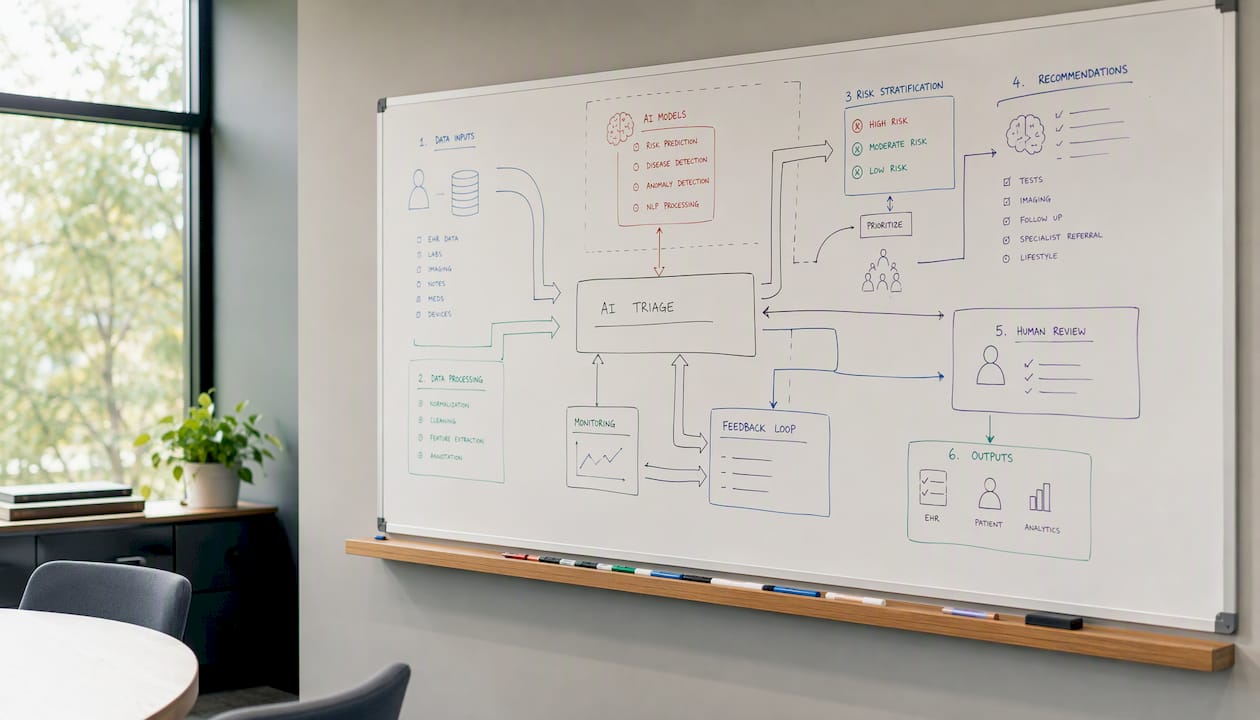
Historically, each health system that wanted to deploy a diagnostic AI tool had to run its own validation study, build its own governance framework, and absorb its own implementation risk. That model is slow, expensive, and produces evidence that does not transfer well across institutions with different patient populations and imaging protocols.
The consortium model changes that calculus. When twelve health systems co-design workflows and share governance lessons across nearly 20 million patients annually, the validation burden is distributed and the resulting evidence is more generalizable. For ACOs specifically, this matters because diagnostic delays and imaging throughput directly affect total cost of care and quality scores.
Practical recommendations for ACO leaders:
- Pilot AI diagnostic tools within a defined subset of network sites before system-wide deployment.
- Require continuous monitoring protocols and a named clinical governance owner, not just an IT project manager.
- Request shared evaluation frameworks from the vendor: what metrics are they tracking across all client sites, and will they share aggregate benchmarks?
- Ask whether the vendor participates in any multi-institution validation consortium and what governance obligations that creates for your data.
- Confirm FDA clearance status and intended use scope before deployment, particularly for AI tools that influence clinical decision-making.
Safety and regulatory considerations are not optional. AI diagnostic tools that affect clinical decisions fall under FDA oversight, and ACOs operating in risk-bearing arrangements have additional liability exposure if a tool is deployed outside its validated use case.
7. How to evaluate or replicate one of these partnerships
Use this checklist in due diligence or when designing a pilot. The order reflects priority, not sequence.
- Strategic fit: Does this technology address a specific MSSP quality measure, cost driver, or operational gap your ACO has documented? If the answer is not specific, stop here.
- Clinical fit: Have frontline clinicians reviewed the workflow? Is there a named clinical champion who will own adoption?
- Technical integration: What EHR integration is required? What is the vendor's documented integration timeline for your specific EHR version? Review population health platform features against your current stack before committing.
- Data governance: Who owns the data? What are the de-identification standards? What happens to your data at contract termination?
- Financial model: Is any portion of vendor fees tied to performance outcomes? What is the total cost of ownership including integration, training, and ongoing support?
- Timeline: What is the realistic go-live date given your EHR environment and data quality baseline? What are the milestone-based payment triggers?
- Measurement plan: What metrics will be tracked? What is the baseline period? Who conducts the analysis, and is it independently verifiable?
Sample vendor questions:
- Name three ACO reference sites with comparable attributed populations. What MSSP outcomes did they achieve, and can we speak with their CMO?
- What is your standard data-access SLA, and can we query our own data without routing requests through your team?
- What does your contract say about data portability and destruction at termination?
Go / pilot / no-go decision rule: If the vendor cannot name a comparable reference site with a verifiable outcome metric and cannot specify a measurement methodology before contract signing, run a time-limited pilot with a defined exit clause rather than a full deployment commitment.
Minimum metrics to see at 90 days: Data quality score (completeness and accuracy of ingested records), baseline population risk stratification, and at least one quality measure gap report. At 180 days: first PMPM trend signal, care gap closure rate, and clinician adoption rate by site.
8. What The StartupMD sees working in practice
Three patterns show up consistently in ACO technology partnerships that reach measurable outcomes, and they are worth naming plainly.
First, pilots tied to a specific HEDIS measure or quality metric outperform open-ended technology evaluations. When the ACO defines upfront that the pilot will measure, say, colorectal cancer screening rates or HbA1c control in a defined diabetic cohort, the vendor has a clear target and the clinical team has a reason to engage. Vague pilots produce vague results.
Second, clinician onboarding plans that are designed before go-live, not after, are the single strongest predictor of adoption. The technology is rarely the barrier. The workflow change is. ACOs that assign a clinical champion per site and build a structured onboarding sequence, including a feedback loop back to the vendor, consistently see faster adoption than those that treat training as an IT function.
Third, co-funded evaluation frameworks, where both the ACO and the vendor contribute to the measurement infrastructure, produce more credible outcomes data. When the vendor funds the entire analysis, the results are harder to defend to a board or a CMS auditor. When the ACO has skin in the measurement process, the data is more defensible and more useful for future contract negotiations.
These patterns are not proprietary observations. They show up in the AHPA + Innovaccer case study, in the MultiCare + Tuva co-investment structure, and in the governance design of the Aidoc Consortium. The difference is that most ACOs encounter them after a failed pilot rather than before.
The StartupMD helps ACOs evaluate and govern technology partnerships
ACO technology decisions carry real financial risk. A misaligned vendor contract or an underdefined pilot can cost a year of MSSP performance and significant internal capital. The StartupMD provides fractional Chief Medical Officer services and advisory support specifically designed for organizations navigating these decisions, from initial vendor evaluation and pilot design to KPI definition, governance coaching, and board-level reporting.
Paul Bergeron, MD, MBA brings over 25 years of combined clinical and business experience to partnership evaluation engagements. The work is practical: define the clinical problem, structure the pilot, set the measurement plan, and build the governance framework before the contract is signed. If you are evaluating a population health platform, a diagnostic AI tool, or an EHR-based ACO infrastructure partnership, the StartupMD services page outlines how an engagement works. For financial modeling and ROI framing specific to healthcare SaaS partnerships, the healthcare SaaS revenue model evaluation guide is a useful starting point. Reach out directly to discuss whether a fractional CMO engagement fits your current evaluation stage.
Primary sources and further reading
Regulatory and measurement guidance:
- CMS Medicare Shared Savings Program data and guidance
- CMS ACO Primary Care Flex Model FAQs
- AHRQ CAHPS patient experience measurement methodology
Health system strategic announcements:
- OCHIN and C3 Medicare ACO partnership announcement (March 2026)
- Cleveland Clinic and Siemens Healthineers 10-year alliance announcement (July 2026)
- Aidoc Diagnostic AI Consortium announcement (August 2026)
Vendor and partner case studies:
- MultiCare Connected Care + Tuva Health partnership (Fierce Healthcare)
- AHPA + Innovaccer MSSP case study
- RWJF: The Secret to Successful Health Partnerships
Sources
- Ochin
- Tuva Health and MultiCare Connected Care partner to power VBC insights
- Siemens Healthineers and Cleveland Clinic launch 10-year strategic alliance to enhance care through clinical innovation and advanced imaging
- AHPA Achieves $1.8M MSSP Savings with Innovaccer — Innovaccer
- MSSP ACO data